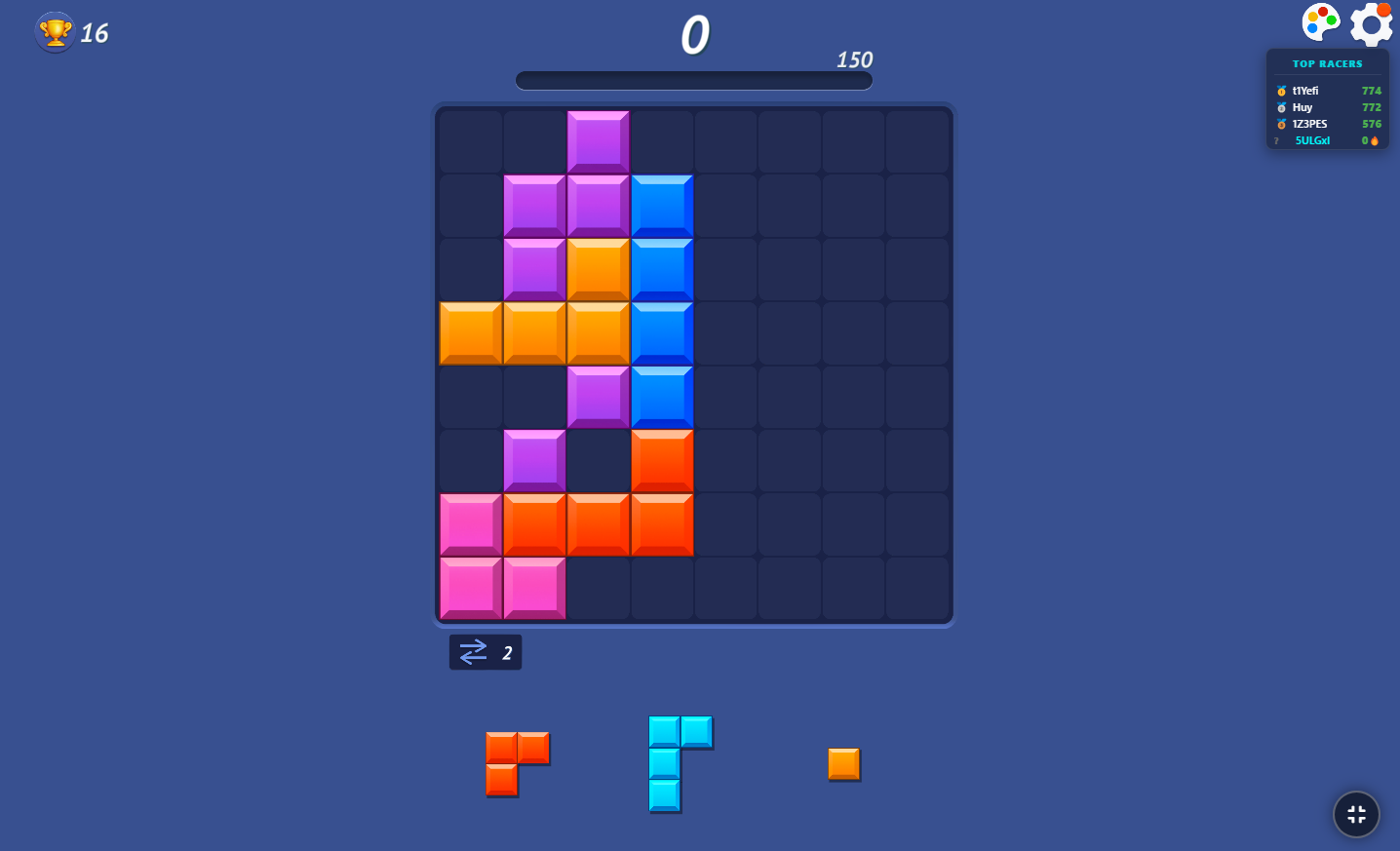
Gaming history is often defined by fast-paced action, cutting-edge graphics, and cinematic storytelling. However, there is one genre that has remained a constant pillar of the industry for over four decades: the **Block Puzzle**. From the flickering monochrome screens of the 1980s to the high-performance neon portals of 2026, the humble block puzzle has evolved in ways its creators could never have imagined. Today, games like **Blocky Blast** are leading the next revolution by combining classic mechanics with real-time cloud competition.
In this 1500-word historical analysis, we will trace the lineage of block puzzles, examine the technological breakthroughs that changed the genre, and explore why "Live Racing" is the definitive future of digital puzzles.
The Genesis: Tetris and the Russian Revolution (1984)
Every story about block puzzles must begin with Alexey Pajitnov, a software engineer at the Academy of Science in Moscow. In 1984, Pajitnov created a simple program based on a childhood game of pentominoes. He named it **Tetris** (a portmanteau of 'tetra' and 'tennis').
Tetris introduced the fundamental concept of "Line Clearing." It was the first game to utilize gravity as a core mechanic—forcing players to think under pressure as blocks dropped from the sky. The game was an instant psychological phenomenon. Researchers even discovered the "Tetris Effect," where players would continue to see falling blocks in their minds hours after they had stopped playing. Tetris proved that a game didn't need complex graphics to be deeply engaging; it only needed a solid mathematical loop.
The Handheld Era: Game Boy and Universal Accessibility (1990s)
The 1990s saw the block puzzle genre explode into the mainstream thanks to the Nintendo Game Boy. By bundling Tetris with the console, Nintendo ensured that an entire generation of humans grew up with a puzzle game in their pocket. This era also saw the birth of diverse spin-offs like **Dr. Mario** (match-3 elements) and **Columns**.
The Shift to Match-3 and Color Puzzles
As hardware improved, the genre began to diversify. Developers realized that color could be used as a mechanic alongside shape. This eventually led to the "Bejeweled" and "Candy Crush" revolution of the early 2000s. While these games were massive hits, many "pure" puzzle fans felt that the genre was losing its strategic depth in favor of flashy animations and "pay-to-win" power-ups.
The Renaissance of the "Still" Puzzle (2010s)
Around 2015, a new sub-genre began to take over mobile app stores: the **Wood Block Puzzle**. These games returned to the roots of the genre but removed the element of gravity. Instead of falling blocks, players were given three pieces at a time to place on a static 10x10 or 8x8 grid.
Why "No Gravity" Worked
Removing gravity changed the psychological profile of the game. It turned a high-stress "reflex" game into a "meditative strategy" game. Players were no longer fighting a clock; they were fighting their own spatial limitations. This era focused on "Zen" gameplay and long-form strategy. It was relaxing, but it lacked one crucial element: **Social Stakes**.
2026: The Blocky Blast Revolution (Live Racing)
This brings us to the modern era and the birth of **Blocky Blast**. We looked at the meditative beauty of the static grid puzzle and asked: How do we make this competitive without losing the 'Zen' feel? The answer was **Real-Time Data Syncing**.
1. The Cloud Integration
In previous eras, you played against yourself. You might see a high score from a friend, but you weren't "competing." Blocky Blast uses modern web technologies (WebSockets and Node.js) to turn every move you make into a global event. When you place a block, our servers update your score instantly. This allows for a "Live Racing" experience where you can see your opponents' scores climbing in real-time on the sidebar.
2. The "Emerald-Cyber" Aesthetic
Visually, we have moved from the 8-bit gray scales of the 1980s to the high-contrast, neon-on-dark aesthetics of today. Our "Emerald-Cyber" theme isn't just about looking cool; it's designed for modern hardware. OLED screens and high-resolution monitors allow us to use light and color in ways that were impossible 40 years ago, reducing eye strain while maximizing visual clarity.
Phase 3: The Technology Behind the Blast
Modern block puzzles like Blocky Blast are marvels of software engineering. They must be lightweight enough to run in a browser but robust enough to handle thousands of concurrent players.
- Unity WebGL: Allows us to deliver high-quality 60FPS graphics directly to your browser without any installation.
- MongoDB Atlas: Ensures that your global rank is saved and secured against a massive database of millions of scores.
- Responsive Design: The game must intelligently rescale itself from a 32-inch 4K monitor down to a 5-inch smartphone screen seamlessly.
Step-by-Step: How to Experience the Evolution
- Enter the Portal: Open BlockyBlast.online on any device.
- Nickname Entry: By entering a nickname, you officially enter the "Live Racing" ecosystem.
- Observe the Sidebar: Watch the players marked with "🔥 RACING." You are now part of a 40-year historical continuum of puzzle masters.
- Feel the Flow: Experience the perfect balance between the 1980s logic and 2020s technology.
Frequently Asked Questions (FAQ)
Is Blocky Blast better than Tetris?
It's not about being better; it's about being different. Tetris is a game of speed and reflexes. Blocky Blast is a game of foresight and spatial management. Both are essential parts of the genre's history.
Why are block puzzles still popular after 40 years?
Because they satisfy a fundamental human need for order and organization. The satisfaction of filling a gap and watching it disappear is a "universal" joy that transcends culture and age.
Conclusion: The Future is Bright (and Neon)
The journey from a small laboratory in Moscow to the global "Live Racing" portal of Blocky Blast has been one of constant innovation. We have taken the core DNA of the block puzzle—shape, space, and resolution—and evolved it for the modern, connected world.
As we look forward to the next decade, we see even more integration. Perhaps AR (Augmented Reality) will allow us to place blocks on our physical tables, or AI will create custom challenges for every player. But no matter how much the technology changes, the "Blast" will remain. The grid will always be there, and the quest for the perfect placement will never end. Welcome to the evolution. Welcome to Blocky Blast.