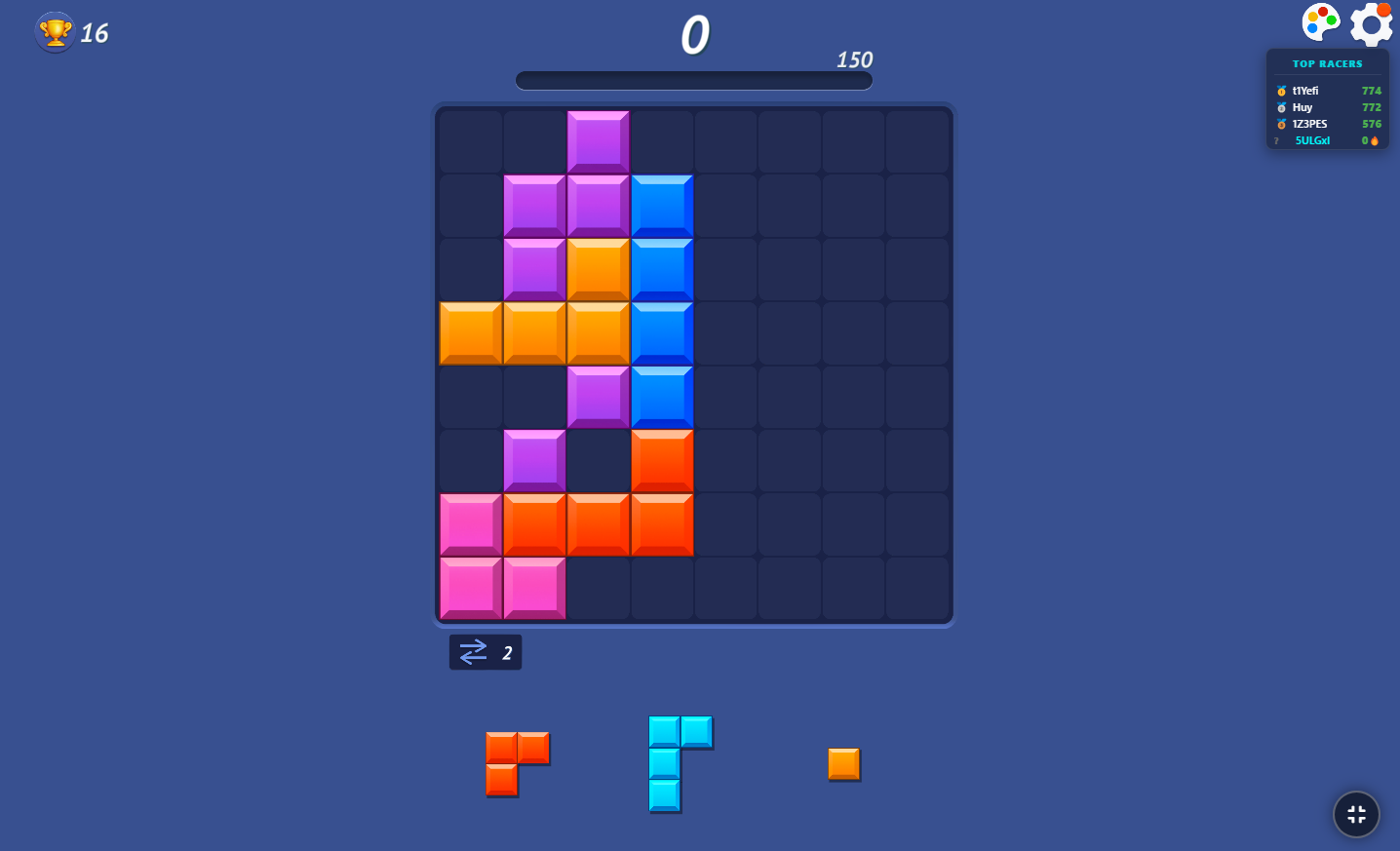
For decades, the mainstream perception of video games was that they were a distraction—a passive way to kill time. However, as neuroscience has advanced, a different picture has emerged. Modern puzzle games, specifically grid-based spatial challenges like **Blocky Blast**, are being recognized not just as entertainment, but as powerful tools for cognitive enhancement. In this deep dive, we will explore the neuroscientific principles behind block puzzles and why 15 minutes of gameplay a day might be the best workout your brain ever had.
This 1500-word article will break down the impact of puzzle gaming on neural plasticity, spatial reasoning, pattern recognition, and executive function. By the end, you'll understand exactly what happens inside your brain when you clear a row of neon blocks and how that translates to real-world intelligence.
Neural Plasticity: Re-Wiring the Brain Through Play
One of the most exciting discoveries in modern neuroscience is **Neuroplasticity**—the brain's ability to reorganize itself by forming new neural connections throughout life. For a long time, it was believed that the adult brain was "fixed." We now know that our brains are more like muscles; they strengthen the pathways that are used frequently and prune the ones that aren't.
When you play Blocky Blast, your brain is constantly challenged to solve problems in real-time. Each new set of three pieces forces your neurons to fire in specific patterns as you evaluate possibilities. Over time, this repetitive but varied stimulation strengthens the neural networks responsible for logical thinking and spatial visualization. You aren't just getting better at the game; you are literally training your brain to be more efficient at processing information.
Phase 1: The Mastery of Spatial Reasoning
Spatial reasoning is the ability to visualize and manipulate objects in three-dimensional space. It's a skill used by architects, surgeons, pilots, and engineers every single day. In Blocky Blast, spatial reasoning is the core mechanic. Because you cannot rotate the blocks, your brain must perform "mental rotations" of the pieces to see how they interact with the current grid layout.
1. Mental Rotation and Visualization
When you look at a 3x2 'L' block in your dock, your brain's parietal lobe activates. It scans the board, mentally "lifting" the piece and testing it against every open space. This mental simulation is a high-level cognitive task. By practicing this thousands of times in a gaming environment, you improve your ability to visualize complex structures in the real world. Studies have shown that students who play spatial puzzles perform significantly better in STEM (Science, Technology, Engineering, and Math) subjects.
2. The Tetris Effect in Modern Puzzles
The "Tetris Effect" is a phenomenon where people who play a game for a long time begin to see the game's patterns in their real-life surroundings. While it sounds like a distraction, it's actually a sign of the brain becoming hyper-efficient at pattern recognition. In Blocky Blast, this translates to a better ability to organize information and see the "big picture" in complex projects. Your brain starts naturally looking for ways to "fit" tasks together to maximize efficiency, just as you fit blocks to clear lines.
Phase 2: Pattern Recognition and Executive Function
Executive function is a set of cognitive processes that include working memory, flexible thinking, and self-control. These are the skills we use to manage time, pay attention, and switch focus. Blocky Blast is a masterclass in training these executive functions.
The Role of Working Memory
Working memory is like the RAM in your computer—it's where you store information temporarily while you're using it. In Blocky Blast, you must hold the board state in your mind while evaluating three different pieces. You need to remember where the "holes" are, which lines are close to completion, and which pieces you might receive next. This constant "loading and unloading" of data is a vigorous workout for your short-term memory.
Inhibitory Control and Patience
Executive function also involves inhibitory control—the ability to stop yourself from making a rash decision. Beginners in Blocky Blast often fail because they place pieces too quickly. Developing the self-control to pause, evaluate all three pieces, and wait for the optimal move is a direct exercise in emotional regulation and patience. These are skills that transfer directly to professional environments where quick, impulsive decisions can be costly.
Phase 3: The Dopamine Loop and Motivation
Why is Blocky Blast so addictive? It's all about the **Dopamine Feedback Loop**. Dopamine is a neurotransmitter associated with pleasure and reward. Every time you clear a line, your brain releases a small burst of dopamine. When you hit a massive combo, that burst is even larger.
Healthy vs. Unhealthy Gaming
Unlike "infinite scroll" social media, which provides cheap, passive dopamine, puzzle games provide **earned dopamine**. You had to solve a problem to get the reward. This creates a healthy motivational cycle. It teaches your brain that effort leads to success. This sense of accomplishment—of solving a difficult board and climbing the leaderboard—builds a "growth mindset," the belief that your abilities can be developed through dedication and hard work.
Step-by-Step: Training Your Brain with Blocky Blast
- Observation: Before moving a piece, look at the entire 8x8 grid. Identify the largest open areas.
- Mental Simulation: Visualize the placement of all three current pieces before you move any of them.
- Evaluation: After a line clear, observe how the board state has changed. What new opportunities did that clear create?
- Meta-Analysis: After a Game Over, look at the board. Where was the bottleneck? What could you have done five turns ago to prevent this?
Frequently Asked Questions (FAQ)
Can puzzles really prevent cognitive decline?
While not a cure, many studies suggest that engaging in cognitively demanding tasks like puzzles can build "cognitive reserve," which may delay the symptoms of age-related memory loss and dementia.
How long should I play each day for benefits?
Consistency is better than intensity. Playing for 15-20 minutes daily is more effective for neural development than playing for 5 hours once a week.
Is Blocky Blast suitable for children?
Absolutely. In fact, grid puzzles are excellent for developing spatial awareness and logical thinking in children without the over-stimulation of violent or high-speed action games.
Conclusion: Investing in Your Intellectual Capital
In a world of passive entertainment, choosing to spend your time on a game like Blocky Blast is an investment in your brain's health. You are training your spatial reasoning, strengthening your working memory, and refining your executive functions—all while having fun and competing for glory on a global stage.